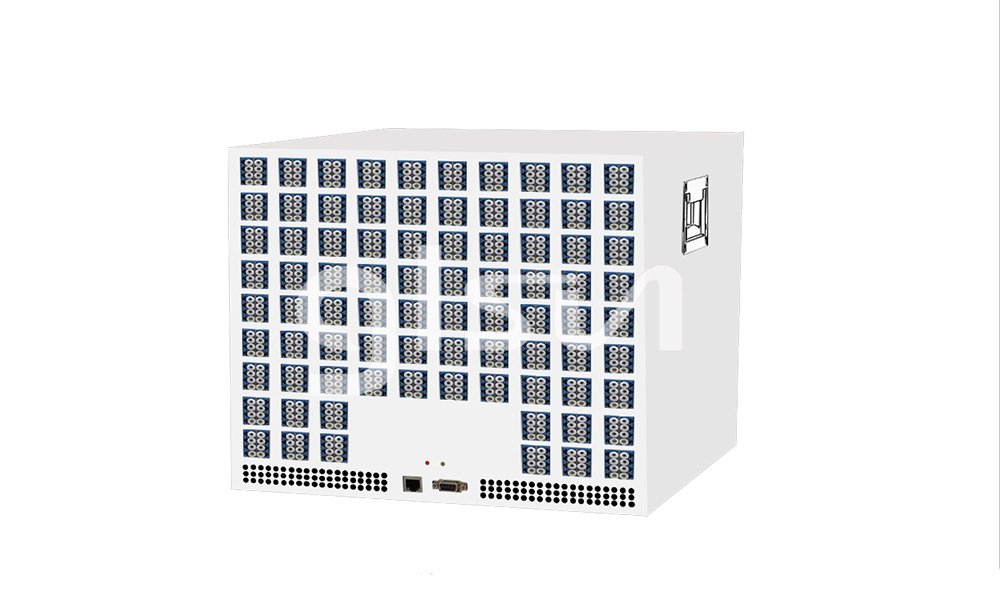
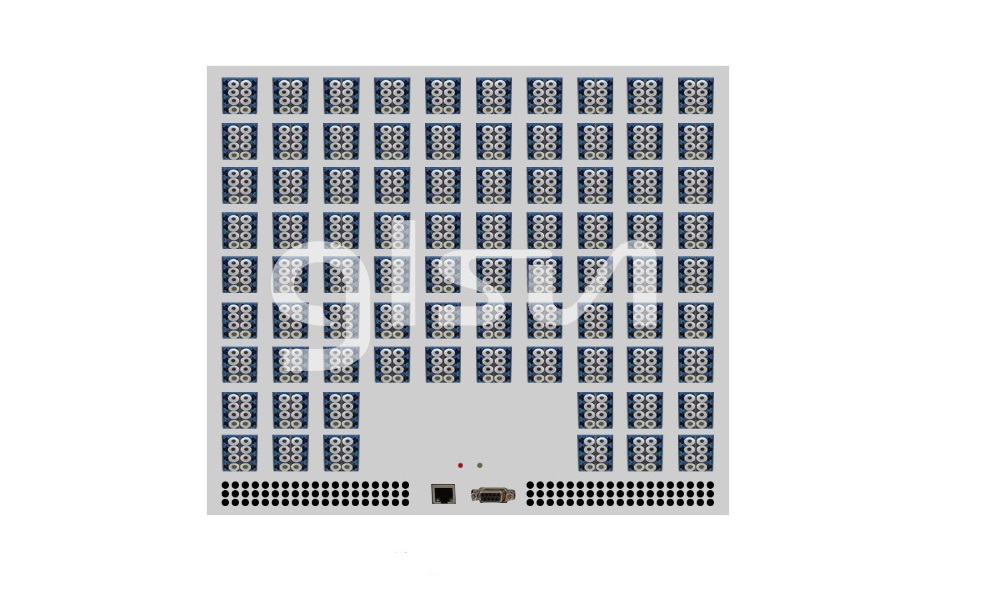
The OCS Equipment is designed using proprietary 3D MEMS mirror technology, providing superior optical performance. Its typical application scenarios primarily focus on areas requiring high-speed, high-capacity, low-latency, and flexibly reconfigurable physical optical channels. The device supports manual creation, modification, or deletion of optical cross connections through drag-and-drop, clicking, and other methods via the Web or client interface. Alternatively, users can log in to the device via Telnet or SSH and enter specific command line instructions for operation.
Key Features
Transparent transmission: Due to its exchange at the optical layer, it is completely transparent to the signal's rate, format, and protocol. Whether it's 10G, 100G, 400G, or the 800G signals, and whether it's SDH, OTN, or Ethernet protocols, OCS can handle them all equally. This is one of its core advantages.
Extremely low power consumption: The switching process does not involve photoelectric conversion or digital signal processing, but merely changes the optical path through reflection or refraction. Therefore, its energy consumption is extremely low, typically only a fraction or even one-tenth of that of traditional electrical switching equipment.
Ultra-large capacity: A single optical fiber can carry tens of Tbps of traffic, and OCS directly switches the capacity of the entire optical fiber, enabling a single device to support enormous switching capacity.
Low latency: Optical signals undergo only physical reflection, with virtually no processing delay, typically ranging from a few microseconds to tens of microseconds. This is crucial for applications that are extremely sensitive to latency, such as financial transactions and high-performance computing.
Applications
· Data center interconnection
· Data center internal network (reconfigurable optical distribution network)
· Core backbone network dispatch hub
· Dynamic business configuration and recovery
· High-performance computing and research network