
The Rise of Optical Circuit Switching: Building the Foundation for Next-Generation All-Optical Networks
2026-06-04
In the current era of artificial intelligence (AI) and High-Performance Computing (HPC), traditional data center networks are reaching a critical turning point. As bandwidth demands skyrocket, the limitations of conventional electrical switching—specifically regarding power consumption and latency—have become significant bottlenecks. Optical Circuit Switching (OCS) has emerged as a strategic technological evolution, shifting optical networks from simple "connection" roles to intelligent "switching" functions.
Understanding OCS: A Paradigm Shift in Switching
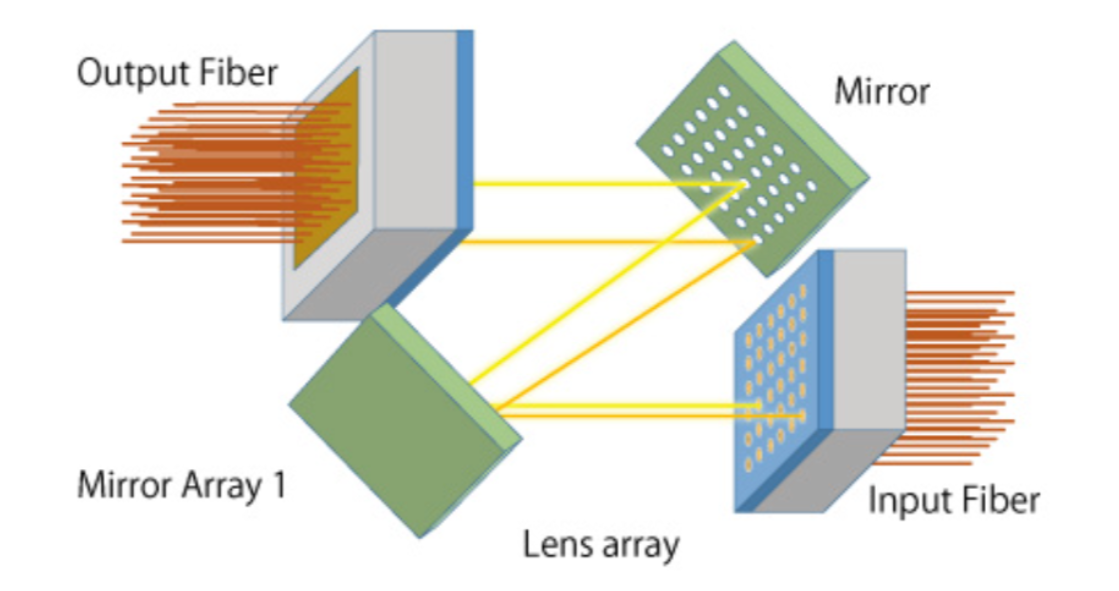
At its core, OCS is an all-optical switching technology designed to manage and establish data paths directly within the optical domain. Unlike traditional switches that require multiple "optical-electrical-optical" (OEO) conversions to process data, OCS operates by physically reflecting or redirecting light signals.
By reconstructing the physical transmission path, OCS creates a dedicated, end-to-end optical circuit between input and output ports. This creates an optical switching matrix that allows signals to pass through without the need for power-hungry electrical processing inside the switch.
Strategic Advantages of the OCS Architecture
The transition to OCS offers several transformative benefits for modern data center architectures:
· Ultra-Low Latency and High Performance: By bypassing the OEO conversion process, OCS minimizes transmission latency, which is critical for the synchronized workloads of AI training clusters. It supports high-bandwidth transmission with minimal insertion loss, ensuring signal stability at extreme speeds.
· Significant Reductions in Power and Cost: Traditional electronic switching requires complex cooling and high energy for OEO modules. OCS simplifies this design, moving the electrical conversion to the server side and utilizing 3D ring-based topologies to drastically cut hardware expenses and energy usage.
· Protocol and Rate Transparency: One of the most powerful features of OCS is its transparency to data formats, protocols, and transmission rates. This allows a single network to interconnect TPU and GPU nodes operating at different speeds, providing immense hardware reusability across multiple generations of technology.
· Dynamic Reconfigurability: OCS allows for the flexible selection of communication paths, enabling a network to adapt its topology in real-time to meet the specific requirements of diverse workloads.
The Diverse Technical Paths of OCSCurrently, the industry is exploring several sophisticated methods to achieve efficient optical switching:
MEMS (Micro-Electro-Mechanical Systems): This is the most widely adopted solution. It uses arrays of tiny mirrors etched onto silicon wafers to redirect light beams with high precision. MEMS is favored for its reliability, stability, and relatively low cost in data center environments.
DLC (Digital Liquid Crystal): This method uses electric fields to change the refractive index of liquid crystal materials to steer light. Because it operates at very low voltages (below 10V), it is highly reliable and often used in specialized environments like submarine networks.
DBS (Direct Beam Steering): This technology leverages piezoelectric ceramics to physically tilt collimators, aligning input and output ports. While currently higher in cost, its low power consumption makes it a promising candidate for future high-speed communication.
Optical Waveguide Solutions: An emerging technology based on silicon-based integrated optical waveguides. While most current deployments use MEMS for scale-out networks, the industry is moving toward these silicon-based optoelectronic OCS systems to achieve higher integration density.
The Evolution of the Optical Transceiver Industry
Contrary to concerns that OCS might replace the need for advanced hardware, it is actually reshaping and elevating the optical transceiver market. While OCS may reduce the demand for certain low-speed point-to-point links, it imposes much stricter performance requirements on the remaining hardware.
The deployment of OCS is driving the industry toward higher data rates (400G, 800G, and 1.6T), lower insertion loss, and the integration of silicon photonics. This marks a fundamental shift from a "quantity-driven" market to one focused on "performance-driven innovation".
Conclusion
Optical Circuit Switching represents a vital leap toward the realization of truly all-optical networks. By breaking the barriers of traditional electrical switching, OCS and high-speed optical transceivers are forming a complementary ecosystem. Together, they provide the necessary infrastructure to support the next generation of AI and HPC demands, creating a more efficient, powerful, and scalable network architecture.